
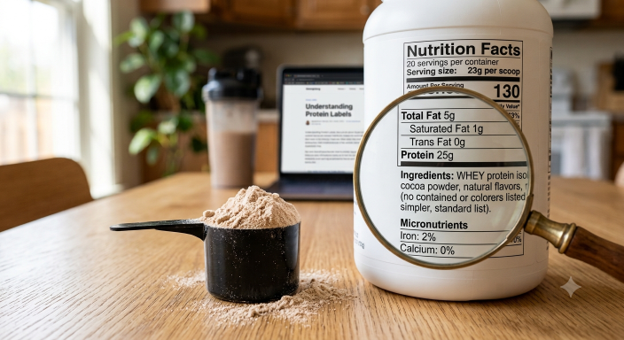
Introduction
Reach your protein tub now and read the nutrition fact label in it. There is a reasonable chance that what’s inside doesn’t match what’s printed on. In most severe recorded cases, it’s not just an underdosed scoop, It’s a liver injury as well waiting to happen. Independent lab testing has repeatedly found Indian protein supplements mislabelled, spiked with cheap amino acids to fake numbers, or contaminated with heavy metals above W.H.O safety limits. This isn’t an internet panic – it is published, peer-reviewed research. Here’s what the science and word adulteration means.
What "Protein powder adulteration" actually means
In the supplement industry, protein powder adulteration refers to the practice of altering, diluting, or corrupting a protein supplement to cut manufacturing cost while making the product appear high-quality on the label. To actually understand how alteration works we have to understand the types of protein adulteration. In these types “AMINO ACID SPIKING” tops the list.
Amino acid spiking — The cheapest trick in the industry
This type is also known as nitrogen spiking. It is primarily a form of economically motivated adulteration. This basically appears when manufacturers add inexpensive amino acids or nitrogen compounds to apparently increase their protein quantity in their product. Few common substances associated are;
- GLYCINE
- TAURINE
- GLUTAMINE
- ARGININE
- OTHER NITROGEN COMPOUNDS
These substances are highly dangerous for your body if it's taken in beyond the safest limit. The problem is that it may be added primarily to the product to show that the product contains excess protein, rather than being transparent and providing a fully nutritional label.
For example, a product claims that they provide 25g of protein per serving and if the product contains large amounts of inexpensive amino acids and less protein from Whey, Milk, Soy than expected, the consumer may significantly receive less protein than what actually the label says.
How can testing be misused ?
Traditional testing of protein often finds the protein in the product by measuring the total amount of nitrogen in a product. The two popular testing are the
- Kjeldahl method
- Dumas method
The basic calculation for measuring is described by FDA:
Crude protein = Total nitrogen × appropriate protein factor
Here is a catch, these methods are useful, but they do not always distinguish nitrogen that comes from intact dietary proteins from nitrogen supplied by free amino acids or other non-protein nitrogen compounds. This creates the opportunities for nitrogen spiking. Added nitrogen can increase the laboratory estimate even though it does not provide the same nutritional value as a complete protein.
The Numbers That Should Worry You
There is actually no cut-off number for the percentage of nitrogen or protein in the product, However readers can understand indicators by below information.
- A protein product claiming 25 g per serving but independently testing below approximately 22.5 g represents a deficit of more than 10% and deserves investigation.
- A product testing 20%–30% below its declared protein value is a serious labelling concern.
- A deficit of 50% or more means the consumer may be receiving only half of the advertised protein.
- A protein powder with unusually high protein claims, a very low price, and free amino acids such as glycine, taurine, glutamine, arginine, or creatine prominently listed should receive additional scrutiny.
- A high total-protein result alone does not prove quality because Kjeldahl and similar methods measure nitrogen and then estimate protein from it. Source
There is no single nitrogen % that allows consumers to diagnose protein spiking. The more useful warning sign is a mismatch between the claimed one and amino acid profile. As a practical rule, a deficit greater than 10% deserves attention, a deficit of 20%-30 is a serious labelling concern, and a deficit of 50% or more indicates that the consumer may be receiving only half of the promised protein.
NOTE: The above numbers describe the product quality, not the amount of protein an individual should consume or a personal toxicity threshold.
If you want to calculate the amount of protein deficit in percentage.
The calculation goes by;
Protein deficit (%)=(Labelled protein − Tested protein) × 100 / Labelled protein
For example;
if a protein label claims 25 g but testing finds 17 g
(25 - 17) × 100 / 25 = 32%
This means the product delivers approx. 32% less protein than advertised. It does not, by itself, prove nitrogen spiking.

Alt text: Infographic: percentage of Indian protein powders found mislabeled in lab testing
When it goes beyond underdosing: Heavy metals and liver injury
This is where you explain the difference between poor quality and actual harm. “Underdosing means the product gives less than what it actually promised through labeling and advertising.” ; dangerous adulteration means the product may contain harmful or undeclared substances such as contaminants, toxic adulterants, or excessive amounts that strain the body. Research on amino-acid supplementation notes that very high intake can raise ammonia-related concerns in people with liver or kidney impairment, while melamine is a well-known example of a nitrogen-rich adulterant associated with kidney injury concerns.
Why this keeps happening in INDIAN supplement market
This keeps happening in India's supplement market because the manufacturers can increase their profit on the product cheaply. In a business point of view the appearance of protein is achieved cheaply and makes the label more attractive in marketing sense and market forces as consumer’s aspiration rises.
Especially in this market the end consumer judges the product based on the number on the label or advertised specific number.
More overly this case is also about lack of protein awareness in India as most Indian diet are not protein friendly but are carbs friendly
The real science behind protein powder — What is actually for :
As per science protein powder is a source of convenience food not a mandatory health product. Its main motive of a protein powder is to help a person meet their daily protein requirement when food alone is inconvenient or practical post-training of diet is not available or achievable.
It is not a suitable for a balanced diet containing pulses, dairy, eggs , fist, meat,soy, grains, vegetable, fruits and healthy fats like nuts and seeds
Protein digestion breaks dietary protein into amino acids. These amino acids are then used to build and repair muscle, skin, hair and hormones , enzymes etc..
For most people , ordinary food is sufficient. Protein powder is best understood as an optional tool for convenience on the other hand it isn’t a shortcut, detox product, detox product or a steroid.
What is WHEY vs. Casein vs. Plant protein – What actually is the difference?
Whey and casein are milk-derived proteins but they digest differently, whereas whey is relatively rapidly digested and contains a high proportion of essential amino acids which includes leucine which helps to stimulate muscle-protein synthesis. It is convenient after GYM workouts whenever a person needs a quick and complete protein source. People with milk allergies should avoid it.
Casein forms a slower digesting protein mixture in the stomach which can provide a more prolonged release of amino acids and may be useful as a part of a meal or snack.
Plant proteins are the ones which include soy, pea, rice, hemp, and blended protein products. They can support muscle and health, but individual plant proteins differ in digestion and amino-acid composition.
The best protein powder depends on your nutrition goals, allergies, digestion, ethics, budget and taste.
How much actual protein do you need ?
Protein requirements are predominantly calculated from body weight, activity,age,health status and total diet of an individual.
The basic recommended intake is around 0.8/kg of body weight in adults with low physical activities, whereas a person who performs regular resistance training or GYM going adults require 1.4 -2.0g of protein per kg of body weight.
Suppose a 70 kg adult workouts 5 days a week , then he requires around 100g -140 g of protein. In this case the protein powder can really be helpful.
Who should NOT consume PROTEIN POWDER:
Age restrictions — Why it is not for under 18’s
Children and adolescents are still in the growing phase, so their nutritional needs are different from those of adult athletes but this doesn’t mean that every protein food or drink is dangerous for teenagers. A doctor may recommend a nutritional supplement specific situation, such as inadequate intakes, recovery from illness, poor growth, or a diagnosed deficiency. In those circumstances, the product and dose should be selected professionally.
For routine gym use, under-18s should not self-prescribe large protein doses simply because of social media hype.
Kidney Disease : When to get a medical clearance first
A person with kidney disease should get advice from professionals before increasing large protein doses. The main function of the kidney is to remove urea, a nitrogen-containing waste product produced when amino acids are metabolized.
A person with chronic kidney disease and liver disease also require caution and should consume very less quantity of protein as required and should get advice from profession
When Whole Food Is Simply the Better Choice
Whole foods are better whenever you can realistically meet your protein needs through meals. Eggs, curd, Paneer, Soy, Fish, Meat are the best source of protein – you don't only get proteins from these sources but also achieve your micronutrients, macronutrients and other compounds which helps in building a perfect diet plan.
Powders also carry risks of mislabelling, adulteration, sweeteners and contaminants, whereas these whole foods have a transparent ingredient list.
How to Actually Choose a Safe Protein Powder
Here is a non-negotiable checklist before you buy any protein powder
 Alt text: Reading FSSAI license and certification marks on protein powder label
- FSSAI LOGO
- VALID LICENSE NUMBER (On the label)
- Correct category label: “Health Supplement”/ “Nutraceutical” — THE BEST!!
- TRANSPARENT INGREDIENT LIST (look for no vague proprietary blends as main feature)
- SENSIBLE SERVING SIZE
- THIRD-PARTY CERTIFICATION (nsf, informed-choice etc..)
- IF NOT THIRD-PARTY, LOOK FOR CREDIBLE LAB TESTING EVIDENCE.
- MANUFACTURER DETAILS, BATCH NUMBER , EXPIRY DATE - MUST HAVE!!
- SUGAR CONTENT VISIBLE IN THE LABEL
Where to Buy
- If you are a consumer trying to buy protein, Try buying it from official brand websites and authorised distributors listed by brand.
- Try to find large, well-regulated online marketplaces where sellers identify and invoices are clear.
Where not to buy
- Social media “DM’s only” supplement deals
- Trainers in social media reselling unverified stock
- Unlabelled loose powders at the gym.
A consumer must cross check FSSAI License number on FosCos and to prioritise brands that publish test reports or any recognised certifications.
Why This Is a Bigger Problem for Coaches Than It Seems
The Trust Gap Between Clients and Supplement Brands

Alt text:"Nutrition coach reviewing client macro plan on tracking dashboard"
In INDIA the common problem lies in the credibility of coaches in promoting the supplements to their clients. Majorly they don't target individual consumer’s needs and wants instead they blindly promote the product regardless of understanding client goals in the right context. They are typically salesmen without being salesmen.
As a client of any gym, try and understand their goals and buy supplements accordingly.
For example; A person with 70 kg of body weight doesn’t achieve his protein goals, he should buy any protein pack by understanding training levels, recovery time, and target physique.
Here software tools like Levorofit helps coaches in planning supplements for their clients and suggests higher profits through AI recommendations.
Frequently Asked Questions
Is protein powder safe to use long-term?
YES - in the long run for most healthy people , protein powders are generally safe.
1 scoop of whey daily for the next few years doesn't really matter.
How do I know if my protein powder is fake or underdosed?
You cannot reliably prove it with a home test . THings like boiling water test, foam test may give you an overview if it's completely fake.
Can teenagers take protein powder?
NO. but sometimes yes with professional help.
Should I stop taking protein powder if I have no medical conditions?
No, not simply because you’ve been taking it for a long time.
The Bottom Line
The uncomfortable truth is this: protein powder was never the problem- the lack of transparency around it was. Independent lab testing has shown that a real share of Indian protein supplements don't contain what their label promises, and in the worst documented cases, the gap isn't just underdosed protein, its undisclosed contaminants.
None of that means protein powder is inherently dangerous; it means the responsibility for verifying safety has quietly shifted onto the consumer, and most people were never equipped to carry it.
The fix isn't fear, it's fundamentals: check the FSSAI number, look for third-party certification, be suspicious of anything priced too good to be true, and remember that no supplement replaces a genuinely well-structured nutrition plan built around real food and timing that works with your body, not against it.
Supplements should close a gap; they should never be the foundation clients are trusting with their health.
⏳ Update History
- v6
Edited by Vinay Jindal
"Updated via admin form"
- v5
Edited by Vinay Jindal
"Updated via admin form"
- v4
Edited by Blog Admin
"Updated via admin form"
- v3
Edited by Blog Admin
"Updated via admin form"
- v2
Edited by Vinay Jindal
"Updated via admin form"
- v1
Edited by Vinay Jindal
"Originally written & published"
Vinay Jindal
Fitness • Health & wellness • Nutrition
Vinay Jindal is a wellness content intern at Levorofit with a keen interest in healthcare technology, digital wellness, nutrition, and preventive health. He enjoys researching how emerging technologies like artificial intelligence are improving healthcare accessibility, patient engagement, and overall well-being. Through his writing, he aims to make complex health and technology topics easier for readers to understand. He enjoys exploring the latest developments in nutrition, fitness, recovery, healthy habits, and digital health to create informative content that empowers individuals to make smarter lifestyle choices. At LevoroFit, Prince contributes educational content that helps fitness professionals, nutrition coaches, and health-conscious individuals stay informed about evolving trends in health, wellness, and nutrition.