
27 Easy Ways to Keep Your Yoga Students Coming Back
You do not need complicated technology or an expensive studio to improve student retention. You need to create a yoga studio experience where people feel that they belong. This guide gives you 27 simple ways to improve yoga student retention, increase student engagement, build a stronger yoga studio community, and encourage students to continue their practice.

27 Easy Ways to Keep Your Yoga Students Coming Back
A Simple Guide to Yoga Student Retention for Yoga Studio Owners
Most yoga studios spend a lot of time and money trying to attract new students.
But there is another question that is just as important:
How do you keep your yoga students coming back?
Many studios focus heavily on advertising and getting new people through the door. But if students stop attending after two or three months, the studio has to keep replacing them.
The real solution is yoga student retention.
Students are more likely to stay when they feel known, supported, connected, and able to see real progress.
You do not need complicated technology or an expensive studio to improve student retention.
You need to create a yoga studio experience where people feel that they belong.
This guide gives you 27 simple ways to improve yoga student retention, increase student engagement, build a stronger yoga studio community, and encourage students to continue their practice.
What Is Yoga Student Retention?
Yoga student retention means keeping students engaged with your yoga studio for a longer period of time instead of constantly losing members and replacing them with new ones.
Retention is not only about attendance.
It is about helping students:
-
Feel recognized
-
Build relationships
-
Develop consistent habits
-
See progress
-
Enjoy their yoga classes
-
Feel part of a community
-
Believe that yoga is improving their life
When students feel connected to your studio, they are more likely to keep attending.
Section 1: Make Yoga Students Feel Known and Special
People naturally like places where they feel recognized.
When someone knows your name, remembers something about you, and asks how you are doing, you feel valued.
That simple feeling can make a big difference in yoga studio retention.
Here are several simple ways to make your students feel important.
1. Always Call Students by Their Name
The simple idea
Do not just memorize student names.
Make remembering and using names part of how your yoga studio operates.
How to do it
-
Keep a simple list of student names and one useful detail about each person.
-
For example, you might remember that Priya loves meditation or Rahul plays cricket.
-
When a new student arrives, make sure someone uses their name before class starts.
-
During class, use their name when giving individual guidance.
-
Ask about something you remembered from a previous conversation.
For example:
"Priya, great job on that stretch!"
Or:
"Rahul, how was your cricket match?"
Why it works
When you call someone by their name, they feel important.
They no longer feel like "person number five in the class."
They feel like a real person whom their yoga teacher knows and cares about.
Example
Instead of saying:
"Good flexibility."
Say:
"Priya, your flexibility is so much better than last week."
Now Priya feels seen and recognized.
That feeling can strengthen her connection to your yoga studio.
2. Talk to Students After Class
The simple idea
Do not let students leave immediately after class without a quick personal interaction.
How to do it
-
Stand near the door after class.
-
Ask one simple question.
-
Ask how the class felt.
-
Ask which part they enjoyed.
-
Say goodbye personally.
-
Ask when they plan to come back.
You only need one or two minutes per student.
Questions you can ask
-
"How did class feel today?"
-
"Which part did you enjoy?"
-
"How are you feeling after the practice?"
-
"Are you coming on Thursday?"
Why it works
The moment immediately after yoga class is often when students feel relaxed and positive.
A short conversation helps connect that positive feeling with your yoga studio and your yoga teacher.
Students remember that someone cared about their experience.
3. Give Students Real Prizes and Recognition
The simple idea
When students reach important milestones, give them something they can see, hold, and remember.
How to do it
-
Celebrate the 50th yoga class.
-
Celebrate the 100th yoga class.
-
Create a "Student of the Month" recognition.
-
Give small gifts such as a yoga strap or meditation cushion.
-
Display student photographs and stories in the studio.
-
Celebrate long-term membership milestones.
Why it works
Recognition gives students visible proof that they are part of your community.
A certificate on their wall can remind them of their journey and their connection to your studio.
Example
Priya completes 100 yoga classes.
You give her a beautiful certificate with her name.
She puts it in her bedroom.
Every time she sees it, she remembers her progress and your yoga studio.
That is much more powerful than simply sending her an automated attendance notification.
4. Always Be Available — But at Set Times
The simple idea
Students should know when they can talk to their yoga teacher.
You do not have to be available every minute of every day.
Instead, create clear times when students can ask questions or discuss their practice.
How to do it
-
Tell students they can ask questions before or after class.
-
Create a weekly "chat time."
-
For example: every Saturday from 4–5 PM.
-
Offer a monthly 15-minute private coffee chat.
-
Give students time to explain their concerns.
-
Do not make students feel rushed.
Why it works
When students know that you are available, they feel supported.
They know they have someone they can approach when they have questions about their yoga practice.
Example
Rahul has a shoulder concern.
He knows that you have a Saturday chat session.
He comes prepared with questions.
You listen and help him understand how to approach his practice.
Rahul feels looked after.
That relationship can strengthen student retention.
5. Ask Real Questions — Not Just About Attendance
The simple idea
Ask about your students' lives, goals, and experiences — not only how many classes they attended.
Questions to avoid
-
"Are you coming next week?"
-
"Did you pay your membership?"
Better questions
-
"Has your sleep improved since you started yoga?"
-
"Is your work stress lower now?"
-
"What's your goal for the next month?"
-
"Where is yoga helping you in your life?"
-
"How are you feeling about your practice?"
Why it works
When you care about a student's real life, they understand that you are not only interested in their membership payment.
You are interested in them.
Example
Instead of simply saying:
"See you next week."
Say:
"I remember you mentioned back pain. How is it feeling now?"
That shows that you remember the student as a person.
6. Create Your Own Yoga Studio Community Traditions
The simple idea
Create activities that are unique to your yoga studio.
Your goal is to make the studio more than a place where people attend yoga classes.
Ideas
-
Monthly potluck meals
-
Group WhatsApp communities
-
Seasonal celebrations
-
Shared relaxation music playlists
-
Group hikes
-
Outdoor yoga classes
-
Special meditation sessions
-
Community gatherings
Why it works
Students are no longer attending only a yoga class.
They become part of your yoga community.
Example
Every full moon, your studio holds a special meditation session.
Students begin looking forward to it.
They plan their schedules around it.
They tell their friends about the unique tradition.
That creates a stronger emotional connection to the studio.
Section 2: Welcome New Yoga Students Properly
Why the First Two Weeks Matter
The first few weeks are extremely important for new yoga student retention.
A new student can easily feel nervous, confused, or out of place.
Many yoga studios welcome someone during the first class and then stop paying attention.
That is a mistake.
Your goal should be to help every new student feel comfortable and supported from the beginning.
7. Use a Simple 3-Step New Student Welcome Plan
The simple idea
Do not simply say "welcome."
Create a simple process for welcoming new yoga students.
Step 1 — Day 1: Before Class
Talk to the new student approximately 15 minutes before class.
Ask:
-
"What made you come to yoga today?"
-
"Who told you about us?"
-
"What would you like to get from yoga?"
-
"Is there anything that feels uncomfortable or difficult for you?"
Then reassure them:
"Don't worry about doing everything perfectly. This is beginner-friendly."
Step 2 — Day 2–3: Follow Up
Call or message the student.
Ask:
-
"How was your first class?"
-
"Did anything surprise you?"
-
"How are you feeling today?"
Then recommend the next class.
For example:
"You should try Tuesday at 6 PM next. That class is perfect for beginners."
Step 3 — Week 2–3: Help Create the Habit
-
Send a reminder before their scheduled class.
-
Ask how their practice is developing.
-
After their third class, have a five-minute conversation.
-
Ask what they want to achieve.
Why it works
The student feels that your yoga studio is invested in them.
They are not just "the new person."
They are becoming part of your community.
8. Show New Students Advanced Students
The simple idea
Advanced yoga students can sometimes make beginners feel intimidated.
Instead of hiding advanced students, use them as examples of what is possible with consistent practice.
What to do
-
Let experienced students practice alongside beginners.
-
Explain that advanced students also started as beginners.
-
Ask experienced students to help new students set up props.
-
Share stories from students who have practiced for six months or longer.
-
Use real student progress stories.
Example
A new student sees someone doing a headstand.
Instead of allowing the new student to think:
"I can never do that."
Say:
"Ramesh has been practicing with us for two years. He couldn't do a headstand when he started either."
Now the advanced student becomes inspiration rather than intimidation.
Why it works
Students can see a possible future version of themselves.
That can increase motivation and engagement.
9. Check In With New Students After Three Days
The simple idea
Do not treat every new student the same.
Observe how they are doing and personalize your recommendations.
What to observe
-
Why did they start yoga?
-
Are they looking for stress relief?
-
Are they interested in fitness?
-
Are they struggling with breathing?
-
Are they finding certain poses difficult?
-
Do they appear nervous?
-
Are they comfortable in the class?
What to do
Send a personal message such as:
"You did great in class. Based on what I noticed, I think these classes may be a good fit for you."
Then adjust future recommendations.
Why it works
The student can see that you actually paid attention.
You are not simply recommending random yoga classes.
You are helping them find a practice that fits their needs.
10. Use a Welcome Team — Not a Single Buddy
The simple idea
Do not make a new student dependent on one person.
Help them meet several members of your yoga community.
How to do it
-
Ask three or four intermediate students to participate.
-
Rotate the welcome responsibility.
-
Let each person share their yoga story.
-
Create a WhatsApp group for new students.
-
Invite new students to optional coffee or community gatherings.
Why it works
The new student develops several relationships.
They begin to feel that they belong to the wider yoga community.
Example
Priya joins your yoga studio.
Ramesh shows her around.
Divya talks to her about breathing.
Anjali invites her to coffee.
Now Priya has three connections instead of only one assigned buddy.
Section 3: Teach Yoga Classes That Keep Students Coming Back
Good teaching is not about showing the most difficult yoga poses.
It is about creating a class that gives students a meaningful experience.
Students want to understand:
"What am I getting from this class?"
When they can see the value, they are more likely to return.
11. Teach One Clear Goal Per Yoga Class
The simple idea
Do not try to accomplish everything in one class.
Choose one clear goal.
Examples
Today's class could focus on:
-
Better sleep
-
Stress relief
-
Mobility
-
Strength
-
Relaxation
-
Breathing
-
Flexibility
Every part of the class should support that goal.
How to do it
Before class, decide:
"Today's class is about sleep."
Then choose poses and breathing practices that support that objective.
Repeat the connection during the class.
At the end, ask:
"Do you notice how calm you feel now?"
Why it works
Students do not necessarily need endless variety.
They want results.
When every class has a clear purpose, students understand why they are doing the practice.
12. Talk Less and Let Students Practice More
The simple idea
Students came to practice yoga.
Do not turn the class into a long lecture.
What to avoid
-
Long stories about your certification
-
Demonstrating difficult poses simply to impress students
-
Spending excessive time discussing philosophy
-
Long announcements during class
What to do
A simple guideline is:
-
70% practice
-
30% clear instruction
Demonstrate only when necessary.
Keep announcements short.
Why it works
More practice means more experience.
More experience can lead to more noticeable benefits.
And when students feel that the class is helping them, they have more reasons to return.
Example
Less effective class:
15 minutes of talking + 30 minutes of practice.
More practice-focused class:
5 minutes of talking + 50 minutes of practice.
13. Only Teach What You Actually Practice Yourself
The simple idea
Do not teach techniques that you do not understand or practice yourself.
How to do it
-
Practice the techniques you teach.
-
If you teach meditation, practice meditation regularly.
-
Share your own challenges when appropriate.
-
Explain what has genuinely helped you.
Why it works
Students can often tell when a teacher genuinely believes in what they are teaching.
Authentic teaching builds trust.
Example
Instead of simply saying:
"Breathing helps with stress."
You can say:
"I use this breathing technique myself when I feel stressed. It has helped me, so let's try it together."
That creates a more authentic learning experience.
14. Create Yoga Course Series Instead of Random Classes
The simple idea
Instead of offering completely unrelated classes every week, create a four- to six-week series around one topic.
This can improve consistency and help students see progression.
Example: Sleep Better in 6 Weeks
Week 1
Why sleep can be difficult and the basics of the nervous system.
Week 2
Understanding individual sleep challenges.
Week 3
Yoga poses that support relaxation and sleep.
Week 4
Breathing practices for relaxation.
Week 5
Meditation for better sleep.
Week 6
Creating a personal daily practice.
Example: Stress Relief Course
Week 1
How stress affects the body.
Week 2
Yoga poses for stress relief.
Week 3
Breathing practices for calm.
Week 4
Meditation for work-related stress.
Week 5
Community support.
Week 6
Creating a daily practice.
Why it works
When students commit to a six-week program, they become more invested.
They can see their progress over time.
That can encourage them to continue attending.
15. Get Other Yoga Teachers to Watch Your Class
The simple idea
Even experienced yoga teachers can improve.
Ask other teachers to observe your class and give constructive feedback.
How to do it
Every three months:
-
Invite two or three teachers to observe.
-
Ask when students appeared engaged.
-
Ask when students appeared bored or confused.
-
Ask whether your teaching was focused on students or on yourself.
-
Choose one improvement to make.
-
Offer the same feedback opportunity to other teachers.
Why it works
Better teaching creates a better student experience.
A better student experience can support stronger retention.
Section 4: Build a Real Yoga Studio Community
Students Often Stay Because of People
Students may start yoga because they want fitness, flexibility, stress relief, or better health.
But relationships can become an important reason they continue.
A strong yoga studio community makes students feel that they belong.
16. Create Different Groups Within Your Yoga Studio
The simple idea
Not every student has the same interests.
Create smaller communities around different goals.
Example groups
Strength Group
For students interested in arm balances, strength, and advanced poses.
Health Group
For students interested in sleep, digestion, mobility, and general wellbeing.
Peace Group
For students interested in meditation and reflective practices.
Sports Group
For athletes using yoga as part of their physical practice.
Recovery Group
For students looking for supportive practices during difficult periods of life.
For each group
-
Create relevant classes.
-
Use a dedicated WhatsApp group if appropriate.
-
Organize occasional meetups.
-
Organize special workshops.
-
Identify natural community leaders.
Why it works
Students feel that they belong to something specific.
Instead of being part of a generic yoga studio, they find "their people."
17. Let Students Lead — Not Just You
The simple idea
Do not make students passive participants.
Give them opportunities to contribute.
Ideas
-
Let an advanced student help lead a beginner session.
-
Create a yoga book discussion group.
-
Let a student organize a breathing challenge.
-
Encourage students to share success stories.
-
Organize community service activities.
Why it works
When students contribute, they can develop a stronger sense of ownership.
They are no longer simply customers.
They become members of the community.
Example
Ramesh enjoys breathing practices.
You invite him to help lead a breathing session once a month.
He feels trusted and valued.
That can deepen his connection to the studio.
18. Mix Yoga With Other Things Students Love
The simple idea
Your studio does not have to be "yoga only."
Combine yoga with other interests.
Ideas
-
Yoga + Music
-
Yoga + Art
-
Yoga + Cooking
-
Yoga + Writing
-
Yoga + Nature
-
Yoga + Group Discussions
-
Yoga + Meditation
Examples
Yoga + Art
Students practice yoga and then draw or paint.
Yoga + Cooking
Students practice yoga and prepare healthy food together.
Yoga + Nature
Students participate in walking meditation or outdoor yoga.
Yoga + Writing
Students reflect on their experience through journaling.
Why it works
Students can bring more of their interests and personality into the studio.
The yoga studio becomes a broader community rather than only a place for classes.
19. Tell Real Student Success Stories
The simple idea
When students experience meaningful progress, document and celebrate their journey.
How to do it
Every three months:
-
Interview two or three students.
-
Ask what brought them to yoga.
-
Ask what changed.
-
Record a short video if they agree.
-
Share their story with the community.
-
Celebrate their progress.
Questions to ask
-
"What brought you to our yoga studio?"
-
"What was your biggest challenge?"
-
"How has your practice changed?"
-
"What is different in your life today?"
-
"What would you tell someone starting yoga?"
Why it works
Success stories show new students what may be possible.
They also show existing students that their progress matters.
Section 5: Make the Yoga Studio Experience Easy and Simple
The easier it is for students to attend yoga classes, the fewer unnecessary obstacles they face.
Small frustrations can become large reasons to stop attending.
Your goal should be to remove friction.
20. Do Not Give Students Too Many Choices
The simple idea
Too many options can make decisions harder.
Keep your yoga membership structure simple.
Avoid
-
Too many membership plans
-
Too many confusing class categories
-
Complicated payment choices
-
Constantly changing schedules
Instead
Consider offering:
-
One simple core membership
-
Easy payment
-
A clear class schedule
-
Recommended class times
-
Straightforward booking
For example:
"₹2,000/month for unlimited classes."
Why it works
Less confusion can mean less decision-making.
Simple systems are easier for students to understand and use.
21. Make Arriving at Your Yoga Studio Super Easy
The simple idea
From the parking area to the yoga mat, the experience should be simple.
How to do it
-
Use clear parking signs.
-
Have someone greet students.
-
Make check-in quick.
-
Use QR-code check-in if appropriate.
-
Clearly identify studio rooms.
-
Keep yoga props ready.
-
Avoid unnecessary forms and complicated processes.
Example
A student arrives.
A staff member says:
"Hi Priya! The studio is to your left."
The student checks in quickly.
The props are already available.
There is no confusion.
Why it works
Every unnecessary moment of confusion creates friction.
A smooth arrival creates a better overall yoga studio experience.
22. Check Your Yoga Studio Every Three Months for Problems
The simple idea
Walk through your studio as if you were a brand-new student.
Ask yourself
-
Is parking easy?
-
Is check-in simple?
-
Can students find the bathroom?
-
Is the studio room easy to locate?
-
Are props easy to find?
-
Are there unnecessary frustrations?
Do a new-student walkthrough
Every few months:
-
Park like a new student.
-
Enter the building.
-
Check in.
-
Find the yoga room.
-
Find the props.
-
Use the bathroom.
-
Notice anything confusing.
-
Fix the problems you find.
Ask your students
Once a year, ask:
-
"What's confusing about coming to our studio?"
-
"What's difficult?"
-
"What could be easier?"
-
"What do you like about the experience?"
-
"What should we improve?"
Why it works
You can identify problems before they become reasons for students to leave.
23. Anticipate What Students Need
The simple idea
Do not always wait for students to ask.
Think ahead about what they may need during their visit.
Things you can have ready
-
Water
-
Organized yoga props
-
Appropriate room temperature
-
Phone storage or lockers
-
Blankets
-
Cushions
-
Comfortable bathroom supplies
-
Hair ties
-
Other practical essentials
Why it works
These details show that you care about the student's complete experience.
Students remember how a place makes them feel.
Section 6: Identify Students Who May Be About to Leave
One of the most valuable parts of yoga studio retention is noticing problems before a student quits.
24. Watch for Students Who Are Disappearing
The simple idea
Look for changes in attendance and behavior.
Warning signs
A student may be at risk of leaving when:
-
They used to attend four times a week but now attend twice.
-
They stop attending their regular class.
-
They arrive late.
-
They leave early.
-
They stop responding to messages.
-
They no longer stay and talk after class.
One change does not necessarily mean they are leaving.
But several changes together deserve attention.
What to do
If you notice multiple warning signs:
Call the student personally.
For example:
"Hi Priya. I noticed you haven't been coming as often. Is everything okay?"
Then listen.
Do not immediately try to sell another membership.
Find out what is actually happening.
Offer one useful solution
For example:
"Would a different class time work better for you?"
Or:
"Would you like to try the morning class?"
Then follow up later.
Why it works
Many students who leave never explain why.
A personal conversation can uncover problems early.
Example
Rahul's attendance drops from three classes a week to one.
You call him.
He explains that his back feels uncomfortable during evening classes.
You recommend a different class time.
Rahul returns because someone noticed and listened.
Section 7: Help Yoga Students See Their Own Progress
People are more likely to continue when they can see that something is changing.
The progress does not have to be advanced yoga poses.
It could be:
-
Better sleep
-
Less stress
-
More confidence
-
Better mobility
-
Greater strength
-
A more consistent practice
-
Feeling calmer
Help students recognize these changes.
25. Track Personal Yoga Goals — Not Just Attendance
The simple idea
Do not measure student progress only by the number of classes attended.
Ask what the student actually wants from yoga.
How to do it
During the first month, ask:
"What is your real goal?"
Listen for answers such as:
-
"I want to sleep better."
-
"I want less stress."
-
"I want to become stronger."
-
"I want to feel more confident."
-
"I want to build a regular practice."
Write the goal down.
For example:
Priya's goal: Sleep eight hours without waking up.
Every six to eight weeks, ask:
"How is your goal going?"
Why it works
Students may not care that they attended 50 classes.
They care that their life is changing.
That is a much more meaningful measure of progress.
26. Have Students Keep a Simple Yoga Practice Journal
The simple idea
Ask students to spend two minutes after class writing about their experience.
What they can write
-
One thing that surprised them
-
How their body feels
-
One word describing the class
Examples:
Calm
Strong
Peaceful
Energized
Weekly reflection
Students can look back at what they wrote during the week.
They may notice patterns.
For example:
"I wrote 'calm' three times this week."
Or:
"My back feels less tight."
Monthly review
A teacher can review the journal with the student.
Ask:
"What patterns do you notice?"
Then point out progress.
For example:
"You wrote 'strong' for the first time this month."
Why it works
Students can see their own progress.
That makes their yoga practice more meaningful.
27. Celebrate Real Student Transformations
The simple idea
When a student makes meaningful progress, celebrate it.
How to do it
Every three months:
-
Celebrate students who have stayed for 3 months.
-
Celebrate 6-month milestones.
-
Celebrate 12-month milestones.
-
Celebrate 24-month milestones.
-
Ask students how yoga has changed their lives.
-
Give them a record of their progress.
-
Invite experienced students to help newer members.
Ask meaningful questions
Instead of:
"How flexible are you now?"
Ask:
"How has your life changed since you started yoga?"
Why it works
Students feel proud of their journey.
They feel that their progress matters.
And they become more emotionally connected to the community.
The 5 Big Principles Behind Effective Yoga Student Retention
Forget the 27 individual ideas for a moment.
There are five principles behind almost everything in this guide.
1. Make Students Feel Known
Students should not feel like another membership number.
Know their:
-
Name
-
Goals
-
Challenges
-
Interests
-
Progress
-
Experiences
Make them feel like real people.
2. Keep Things Simple
Do not overwhelm students.
Make the following simple:
-
Memberships
-
Payments
-
Class schedules
-
Check-in
-
Communication
-
Recommendations
Simple can create a better student experience.
3. Let Students Be Part of the Community
Do not only teach students.
Let them:
-
Help
-
Lead
-
Share
-
Contribute
-
Organize
-
Support other students
People become more invested when they feel that they have a place in the community.
4. Make Everything Easy
The easier it is to attend a yoga class, the easier it is to build a consistent habit.
Remove unnecessary friction.
Look at everything from the student's point of view.
5. Make Yoga Meaningful
Students stay because they believe yoga is improving their lives.
Focus on meaningful outcomes.
Help students connect their yoga practice with what matters to them.
A Simple 3-Month Yoga Studio Retention Plan
Do not try to implement everything at once.
Choose three ideas and do them well.
Then add more.
Month 1: Make Students Feel Special
Focus on relationships.
Actions
-
Learn student names.
-
Use their names regularly.
-
Talk to students after class.
-
Ask about their lives and goals.
-
Record important student preferences.
Month 2: Welcome New Students Better
Focus on new student onboarding.
Actions
-
Contact new students within 24 hours.
-
Have two or three people welcome them.
-
Check in after their first week.
-
Recommend classes based on their needs.
-
Ask about their goals.
Month 3: Improve Your Yoga Classes
Focus on the quality of the student experience.
Actions
-
Give every class one clear goal.
-
Talk less.
-
Let students practice more.
-
Create a four-week course series.
-
Ask another teacher for feedback.
Then Add More Strategies
Once these systems are working, introduce additional ideas:
-
Community groups
-
Student recognition
-
Workshops
-
Success stories
-
Progress tracking
-
Student journals
-
Retention follow-ups
-
Community events
The goal is not to do everything immediately.
The goal is to build a system that consistently improves the student experience.
Why Yoga Student Retention Matters for Your Studio
A yoga studio cannot grow sustainably if it constantly loses existing students.
You can spend money on:
-
Advertising
-
Social media
-
Promotions
-
Discounts
-
New-member campaigns
But if students leave after a few months, you are constantly starting again.
Retention gives your studio a stronger foundation.
When students stay longer, they have more time to:
-
Build relationships
-
Develop their practice
-
Participate in your community
-
Attend workshops
-
Recommend your studio
-
Become long-term members
That is why yoga student retention should be treated as a core part of yoga studio management.
Quick Summary: 27 Yoga Student Retention Ideas
-
Learn students' names and use them.
-
Talk to students after class.
-
Give students recognition and awards.
-
Be available at dedicated times.
-
Ask about students' real-life progress.
-
Create unique community traditions.
-
Use a three-step new-student welcome system.
-
Show new students the progress of experienced students.
-
Check in with new students after three days.
-
Use a welcome team.
-
Give every yoga class one clear goal.
-
Talk less and let students practice more.
-
Teach what you genuinely practice and understand.
-
Create four- to six-week yoga course series.
-
Get peer feedback on your teaching.
-
Create groups around different student interests.
-
Let students lead and contribute.
-
Combine yoga with other interests.
-
Share real student success stories.
-
Keep membership and class choices simple.
-
Make arriving at the studio easy.
-
Regularly check your studio for problems.
-
Anticipate what students need.
-
Notice students whose attendance is declining.
-
Track personal goals, not only attendance.
-
Encourage students to keep a simple practice journal.
-
Celebrate meaningful student transformations.
You do not need to implement all 27 ideas today.
Pick three.
Do them well.
Then add more.
The Most Important Thing About Yoga Student Retention
Many yoga studios think retention is about:
-
A beautiful studio
-
Expensive equipment
-
Famous teachers
-
Fancy yoga props
-
More classes
-
More advertising
Those things can help.
But they are not the heart of retention.
The most important question is:
When a student walks into your studio, do they feel that you care about them?
Not their money.
Them.
Do you know their name?
Do you remember their goals?
Do you notice when they stop attending?
Do you celebrate their progress?
Do you listen when they have a problem?
Do you help them feel that they belong?
When students feel that connection, they have a reason to stay.
When they do not, even a beautiful studio may not be enough.
Build a Yoga Studio Where Students Want to Stay
Yoga student retention is not about forcing people to attend more classes.
It is about creating an environment where students want to come back.
They should leave your yoga studio feeling:
-
Seen
-
Supported
-
Connected
-
Comfortable
-
Motivated
-
Proud of their progress
That is what turns a yoga class into a community.
And that is what can turn a short-term student into a long-term member.
About LevoroFit
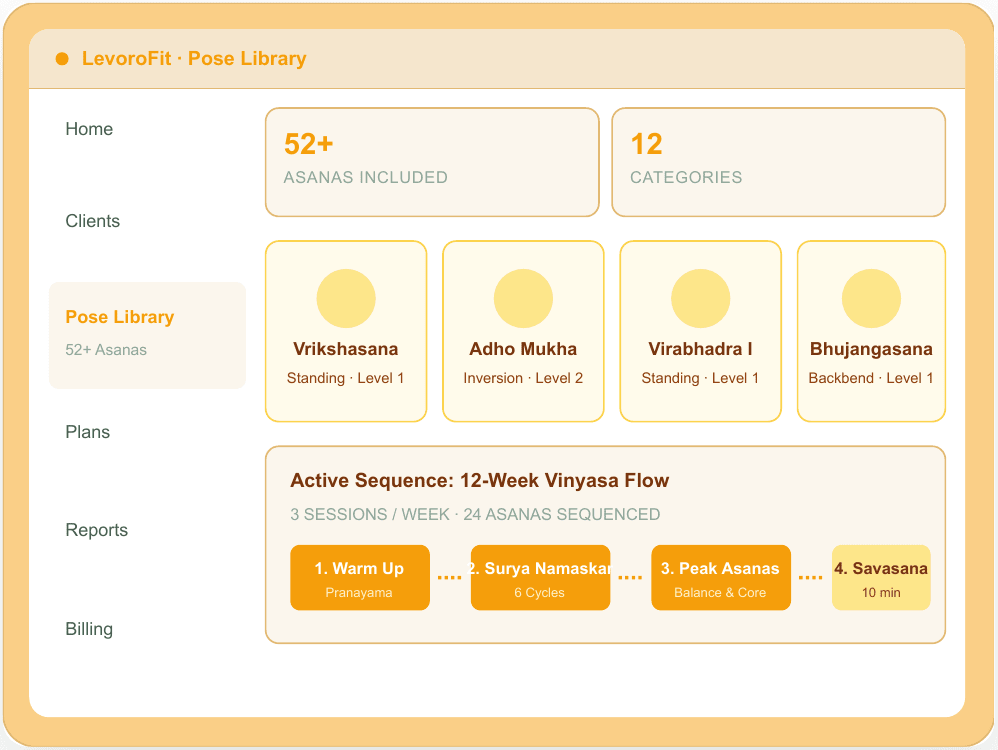
LevoroFit Yoga Studio Software is software designed to help yoga studios manage the student experience.
It can help with areas such as:
-
Tracking student progress, not just attendance
-
Sending personalized messages
-
Managing different groups of students
-
Identifying students whose attendance is declining
-
Organizing student celebrations
-
Supporting student engagement
But software is not the relationship.
The relationship is what matters.
Technology can make it easier for a yoga studio owner or teacher to manage student information and follow-up.
But the foundation remains the same:
Be a real teacher who cares about real students.
Use technology to help you do that better.
Start Today
Do not wait for the perfect system.
Choose one idea from this guide and implement it today.
Tomorrow, choose another.
Start by learning your students' names.
Talk to them after class.
Ask about their goals.
Notice their progress.
Help them feel that they belong.
You do not need a perfect yoga studio.
Your students need a teacher and community that genuinely care about their journey.
Make your students feel known.
Make them feel welcome.
Make their experience easy.
Help them see their progress.
Build a community they want to belong to.
That is the foundation of lasting yoga student retention.
Your students don't need a perfect studio. They need a teacher who cares.
⏳ Update History
Last edited by Blog Admin
"Updated via admin form"
Vinay Jindal
Fitness • Health & wellness • Nutrition
Vinay Jindal is a wellness content intern at Levorofit with a keen interest in healthcare technology, digital wellness, nutrition, and preventive health. He enjoys researching how emerging technologies like artificial intelligence are improving healthcare accessibility, patient engagement, and overall well-being. Through his writing, he aims to make complex health and technology topics easier for readers to understand. He enjoys exploring the latest developments in nutrition, fitness, recovery, healthy habits, and digital health to create informative content that empowers individuals to make smarter lifestyle choices. At LevoroFit, Prince contributes educational content that helps fitness professionals, nutrition coaches, and health-conscious individuals stay informed about evolving trends in health, wellness, and nutrition.



 Book a Demo